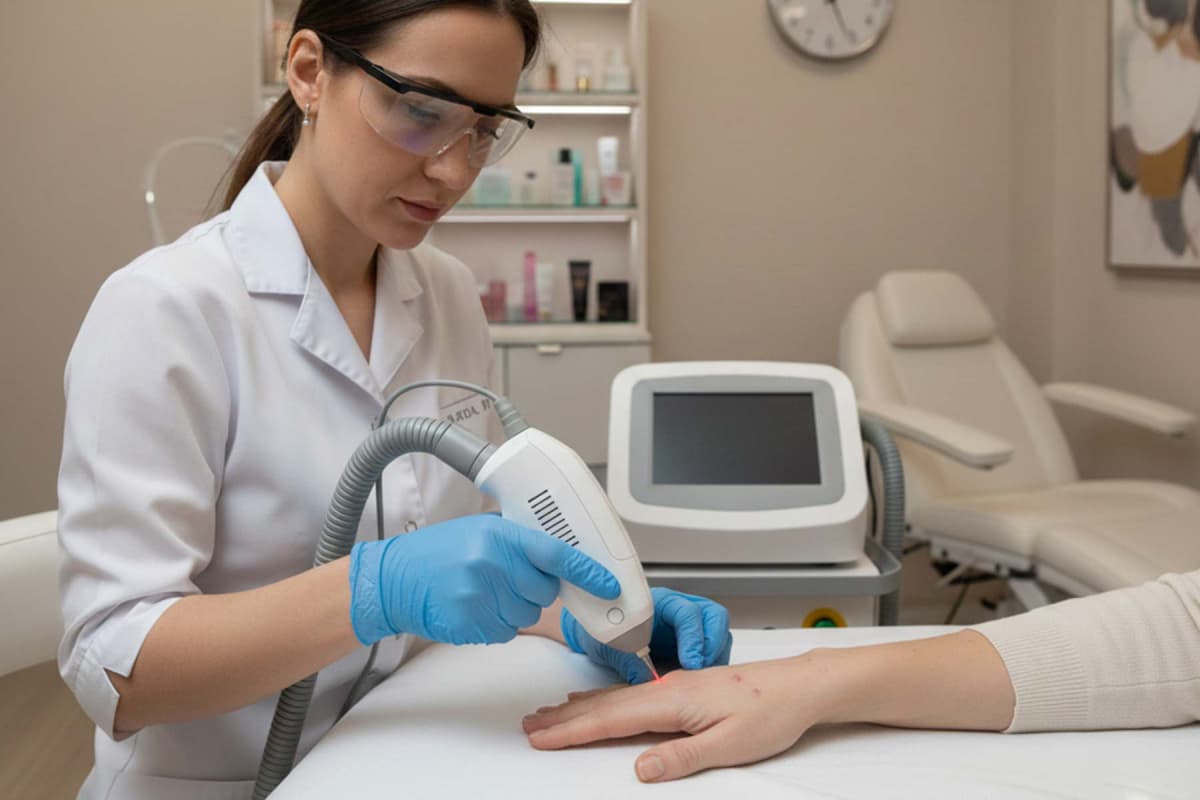
How much does wart removal cost?
How much does wart removal cost?
$150 – $600 average cost per treatment

Average cost | What is it? | Removal methods | Cost factors | FAQs | When to see a dermatologist
Average wart removal cost
Wart removal costs $150 to $600 per treatment on average, depending on the removal method and the complexity of your case. The final price depends on the size and number of warts and their location on the body, whether the warts require pathology testing, your geographic location, and whether your insurance covers the procedure.
Some wart removal methods require multiple treatments spaced two to three weeks apart.
Wart removal cost | |
Removal method | Average cost per treatment |
|---|---|
Cryotherapy | $150 – $450 |
Laser removal | $200 – $600 |
Surgical excision | $250 – $600 |
What is a wart?
Warts are small, rough growths that appear on the skin. They're caused by a viral infection and can develop anywhere on your body, though they're most common on hands, feet, and fingers.
These benign growths have a bumpy texture and may appear flesh-colored, pink, or slightly darker than surrounding skin. While harmless, many people choose removal for cosmetic reasons or if the wart causes discomfort.
What causes warts?
Warts develop when the human papillomavirus (HPV) enters your skin through tiny cuts or breaks. The virus triggers rapid cell growth on the outer layer of skin, creating the characteristic bumpy texture.
HPV spreads through direct contact with warts or contaminated surfaces. You're more likely to get warts if you have a weakened immune system, frequently bite your nails, or walk barefoot in public showers and pools.
Different HPV strains cause different wart types. Common warts typically appear on hands, while plantar warts develop on feet. The virus can remain dormant for months before a wart appears.
How do dermatologists remove warts?
Dermatologists use several different methods to remove warts, depending on the wart's location, size, and type.
Cryotherapy
Cryotherapy involves applying liquid nitrogen directly to the affected area to freeze the wart. The extreme cold destroys the wart tissue and triggers your immune system to fight the virus. A blister forms under the wart, which eventually falls off within one to two weeks.
Cryotherapy wart removal costs $150 to $450 per treatment and may require 1 to 4 treatments. This method works well for common warts and is generally the first-line treatment dermatologists recommend.
Laser wart removal
Laser removal uses focused light energy to heat and destroy blood vessels feeding the wart. Without a blood supply, the wart tissue dies and eventually falls off.
Laser wart removal costs $200 to $600 per treatment. Some people need multiple sessions to eliminate persistent warts.
Surgical excision
Surgical excision involves cutting out the wart and a small margin of surrounding tissue. The dermatologist numbs the area with local anesthesia before making a precise incision to remove the growth. Surgical wart removal costs $250 to $600 on average, but costs can exceed $1,000 for complex cases.
This method is typically reserved for large warts or those that haven't responded to less invasive treatments. The procedure leaves a small scar, so dermatologists often avoid it for cosmetically sensitive areas.
What affects wart removal costs?
Several factors can influence the cost of wart removal at a dermatologist's office:
Removal method: Cryotherapy is generally the least expensive option, while laser and surgical treatments cost more due to specialized equipment and expertise required.
Visit / consultation fee: Initial consultation fees range from $100 to $200 and may be separate from treatment costs. Some dermatologists include the consultation in the total procedure price.
Additional services: Prescription medications, pathology testing for excised warts, and follow-up visits add to the total cost.
Location: Dermatologists in major metropolitan cities or areas with a high cost of living typically charge more. Costs can exceed $600 per treatment or session in these locations.
Does insurance cover wart removal?
Some insurance plans cover wart removal when it's medically necessary, such as when warts cause pain or interfere with daily activities. However, removal for purely cosmetic reasons typically isn't covered.
Coverage varies by plan, so contact your insurance provider before your appointment to verify coverage and check if you need a referral. Your dermatologist's office can usually help by providing documentation of medical necessity.
Ask your dermatologist if they offer discounts for uninsured patients.
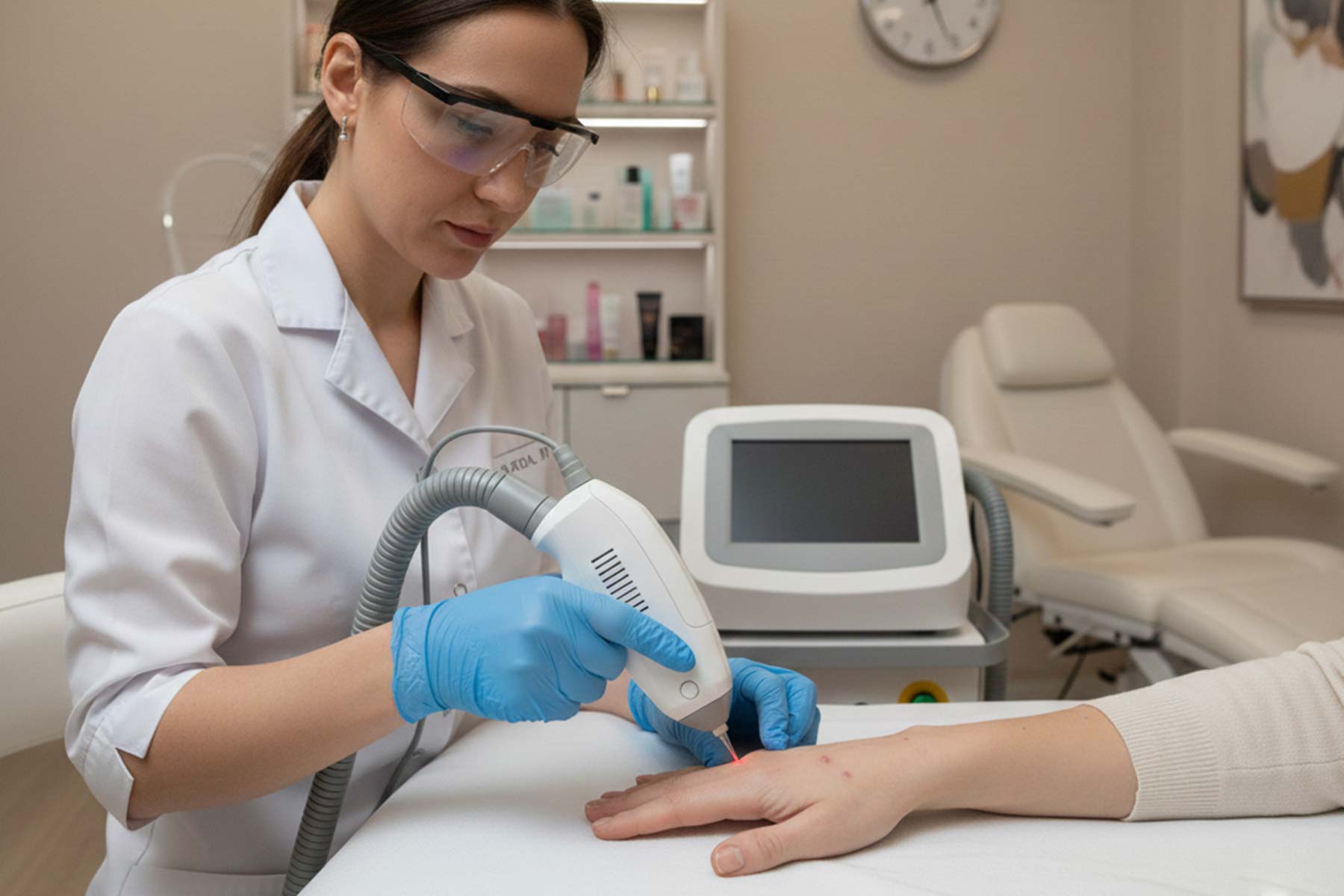
A dermatologist performing laser wart removal on a client's hand
FAQs about wart removal
Do warts go away on their own?
Many warts disappear without treatment, especially in children. However, this process can take months or even years, and there's no way to predict which warts will resolve naturally. Adults tend to have more persistent warts than children, and plantar warts on feet are particularly stubborn.
Do warts hurt or itch?
Most warts don't cause pain or itching, though plantar warts on the bottom of your feet can be quite painful when walking. The pressure from standing or walking pushes the wart inward, creating discomfort.
Some warts may itch occasionally, particularly if they're in areas with frequent friction. If a wart becomes painful, red, or starts bleeding, see your dermatologist to rule out infection or other complications.
Are warts dangerous?
Common skin warts are benign growths and are not themselves skin cancer, but any changing, painful, or atypical lesion should be evaluated by a dermatologist to rule out skin cancer.
When to see a dermatologist about warts
Schedule an appointment if your wart is painful, bleeding, or changing in appearance. Rapid growth or color changes warrant professional evaluation to rule out other skin conditions.
See a dermatologist immediately if you have diabetes or a weakened immune system and develop warts. These conditions increase your risk of complications and require careful medical management.
If you've tried over-the-counter treatments for three months without improvement, professional wart removal is likely necessary. Persistent warts indicate a need for stronger treatment methods available only through a dermatologist.
Questions to ask a dermatologist
When visiting a dermatologist, ask these questions so you're informed about the condition, treatment options, and risks:
What type of wart do I have, and how did I likely get it?
Which removal method do you recommend for my specific case, and why?
How many treatment sessions will I need, and how far apart should they be scheduled?
What's the total estimated cost, including all tests, follow-up visits, and additional services?
Does my insurance cover wart removal, or is it considered cosmetic?
What are the potential side effects and risks of the recommended treatment?
How should I care for the area after treatment to promote healing?
What's the likelihood of the wart returning after removal?
Are there any at-home treatments I should try before professional removal?
How can I prevent warts from spreading to other areas or to other people?
Will the treatment leave a scar, and if so, how noticeable will it be?
When should I schedule a follow-up appointment to check on healing progress?
Medical Advice Disclaimer
The content of this site is for educational purposes only and does not constitute providing medical advice or services. The information provided should not be used for the diagnosis or treatment of health problems. Always consult with a licensed healthcare professional for advice about any medical concerns.