
How much does a transvaginal ultrasound cost?
How much does a transvaginal ultrasound cost?
$200 – $600 average cost (without insurance)

Cost of a transvaginal ultrasound
A transvaginal ultrasound costs $200 to $600 without insurance when used to confirm pregnancy, date gestational age, or check for ectopic pregnancy or miscarriage. A more detailed gynecological transvaginal ultrasound costs $250 to $600 to evaluate symptoms unrelated to pregnancy, such as pelvic pain, menstrual irregularities, or infertility issues.
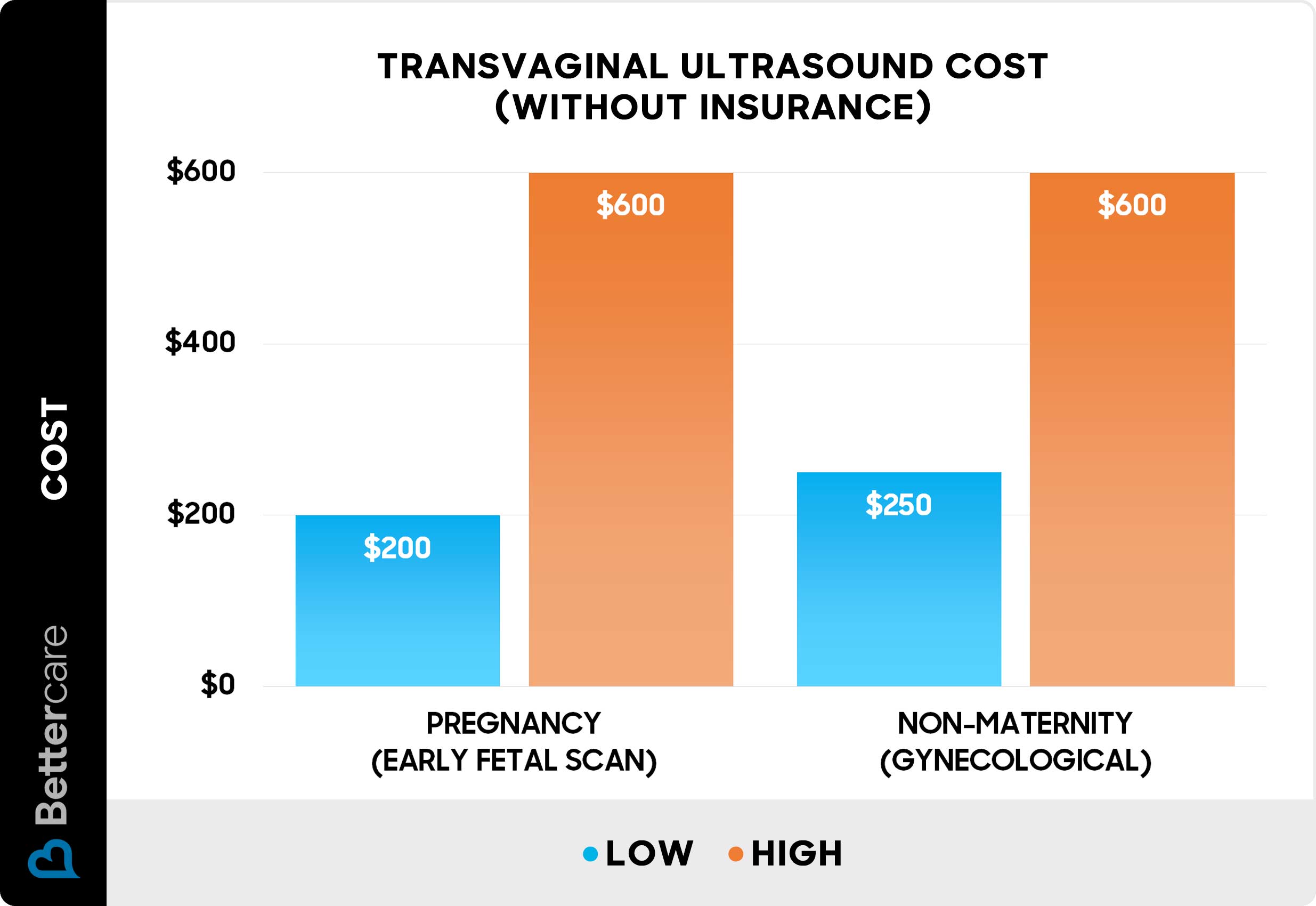
| Procedure | Average cost (without insurance) |
|---|---|
| Pregnancy (early fetal scan) | $200 – $600 |
| Non-maternity (gynecological) | $250 – $600 |
Transvaginal ultrasound in pregnancy
A transvaginal early fetal scan costs $200 to $600 without insurance. This ultrasound uses a vaginal probe to capture detailed images in the first trimester, confirming pregnancy, dating gestational age, and checking for complications such as ectopic pregnancy or miscarriage.
Pregnancy-related scans are often quicker and less complex, costing slightly less than complex gynecological ultrasounds.
Gynecological (non-maternity) transvaginal ultrasound
A gynecological transvaginal ultrasound costs $250 to $600 for self-pay patients and is used to investigate symptoms like pelvic pain, abnormal bleeding, menstrual problems, or infertility. This scan can identify fibroids, cysts, polyps, endometriosis, cancers, and can also check IUD placement or monitor ovarian follicles during fertility assessment.
Transvaginal ultrasound cost factors
The cost of an ultrasound can vary widely based on several factors:
Type and complexity of scan: More detailed or specialized scans cost more than standard 2D ultrasounds.
Professional fees: Both the technician performing the scan and the radiologist interpreting results may bill separately.
Facility type: Hospital-based ultrasounds are often pricier than those at independent imaging centers and gynecological offices.
Insurance coverage: Out-of-pocket costs can be much lower with insurance than without.
Location: Procedures cost more in urban or high-cost-of-living areas than in rural settings.
Additional scans: You doctor may perform an abdominal (external) pelvic ultrasound during the same visit. The pelvic ultrasound cost is often billed as a separate procedure.
What is a transvaginal ultrasound?
A transvaginal ultrasound is an internal imaging test where a slender ultrasound probe is gently inserted into the vagina to produce high-resolution images of the female reproductive system.
This procedure uses sound waves to create real-time pictures, helping providers diagnose causes of pelvic pain, abnormal bleeding, cysts, fibroids, or to confirm and monitor pregnancy. It is quick, painless, and offers more detail than an abdominal ultrasound for pelvic organs.
What does a transvaginal ultrasound show?
A transvaginal ultrasound can show:
Uterus (including uterine lining or endometrium and myometrium)
Ovaries and ovarian follicles
Cervix
Fallopian tubes (if abnormal)
Vagina
Bladder position (as a landmark)
Signs of cysts, fibroids, polyps, tumors, or pelvic infections
Early signs of pregnancy or complications
Is transvaginal ultrasound painful?
Transvaginal ultrasound is not painful for most patients. Most feel only mild discomfort or pressure, similar to a pelvic exam. Some patients with certain conditions (like endometriosis or an infection) may experience more pain, but this is uncommon.

Transvaginal ultrasound FAQs
How long does a transvaginal ultrasound take?
A transvaginal ultrasound procedure takes about 15 to 30 minutes, depending on the reason for the scan. The technician spends most of the time on preparation and image review, while the actual probe insertion is brief.
Can transvaginal ultrasound cause miscarriage?
No, a transvaginal ultrasound does not cause miscarriage. The procedure is very safe and uses only sound waves, not radiation or invasive techniques.
Can you get a transvaginal ultrasound on your period?
Yes, you can have a transvaginal ultrasound while on your period. Bleeding does not interfere with the safety or quality of the exam.
Do you need a full bladder for transvaginal ultrasound?
No, a full bladder is not needed for a transvaginal ultrasound. Most providers will actually ask you to empty your bladder before the exam for comfort. Check with your healthcare provider for instructions on how to prepare for a transvaginal ultrasound.
Questions to ask your healthcare provider
Ask your healthcare provider any questions you have about the procedure or your results. These are some helpful questions to consider:
Why do I need a transvaginal ultrasound?
What will you be looking for during the scan?
How should I prepare for the exam?
Will I need a full bladder?
Who will perform the procedure?
How and when will I get my results?
Will I need any follow-up exams or treatments?
Are there any risks or side effects I should know about?
Can a support person be present during the exam?
What happens if the scan finds something abnormal?
The content of this site is for educational purposes only and does not constitute providing medical advice or services. The information provided should not be used for the diagnosis or treatment of health problems. Always consult with a licensed healthcare professional for advice about any medical concerns.