
How much does a bone density test cost?
How much does a bone density test cost?
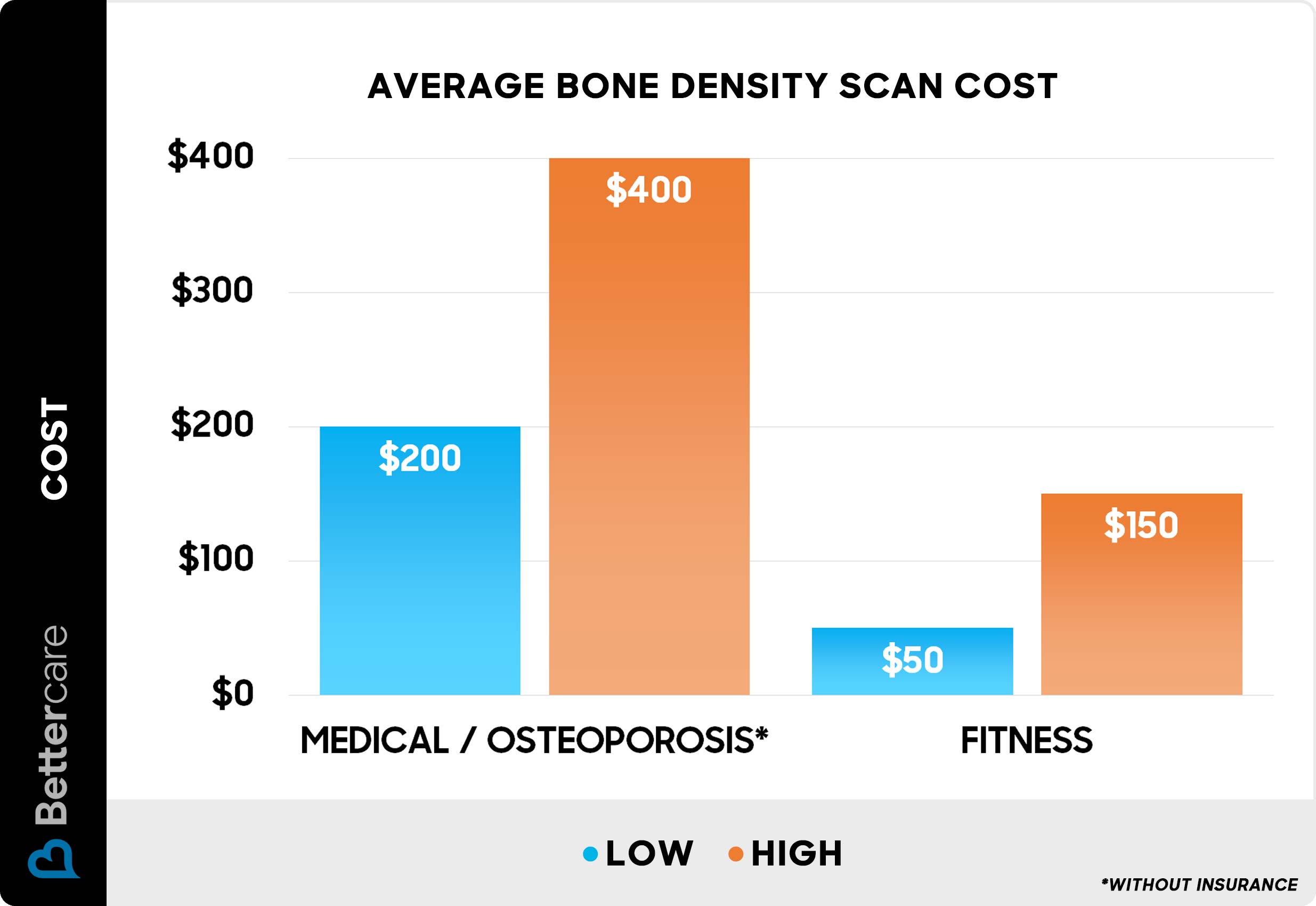
$200 – $400 average cost for medical scan (without insurance)
$50 – $150 average cost for fitness scan

Average bone density test cost
A bone density test costs $200 to $400 on average when ordered for medical purposes, such as screening for osteoporosis or assessing fracture risk. For fitness purposes, a bone density scan costs $50 to $150. Prices depend on the provider, location, and your insurance coverage.
| Scan purpose | Average cost |
|---|---|
| Medical / osteoporosis | $200 – $400 (without insurance) |
| Fitness | $50 – $150 |
Bone density scan cost factors
Several factors affect how much you'll pay for a bone density test:
Purpose of the scan: Medical scans tend to cost more than fitness scans.
Provider: Hospitals often charge higher rates, sometimes exceeding $500 without insurance. Independent imaging clinics or mobile providers offer more competitive pricing. Some providers also charge separately for a radiologist to interpret the scan.
Insurance: Insurance coverage can significantly reduce out-of-pocket expenses, though coverage and copay amounts vary by provider and plan. The first bone density test may have different coverage than follow-up tests.
Location: Costs are often higher in urban areas compared to smaller towns or rural regions.
Membership discounts: For fitness scans, some providers offer memberships that include monthly or quarterly bone density scans at reduced rates of $40 to $45.
DEXA scan cost for fitness
Many gyms, wellness centers, and body composition analysis companies offer DEXA scans as part of overall health tracking. While they typically use the same DEXA technology as medical scans, there are key differences:
Purpose and interpretation: Fitness scans focus on overall body composition analysis, measuring muscle mass, and body fat percentage and sometimes include bone density. Unlike medical scans, they don't have radiologists interpreting results and cannot be used for diagnosing osteoporosis or making medical treatment decisions.
Cost: A DEXA scan for fitness purposes costs $50 to $150 on average, with some gyms and wellness centers offering discounts for members. Medical scans cost more, though insurance often covers most or all of the cost.
Insurance coverage: Insurance does not cover fitness scans since they're considered elective wellness services. Medical scans are eligible for insurance coverage when medically necessary.
Fitness scans are suitable for athletes and fitness enthusiasts tracking body composition changes over time. However, if you meet medical screening criteria or have risk factors for osteoporosis, get a medical scan ordered by your healthcare provider instead.
What is a bone density test?
A bone density test, also called a DEXA scan, is a specialized imaging procedure that measures the strength and mineral content of your bones. It is a non-invasive and painless procedure that helps identify whether bones are becoming fragile or thinning.
Healthcare providers often recommend a bone density scan for individuals at risk of osteoporosis or fractures, while athletes and wellness enthusiasts may use it to monitor bone health over time.
The DEXA scan is considered the gold standard for bone density testing, but portable peripheral scans for the wrist or heel are sometimes used for screening.
What can a bone density test detect?
A bone density test primarily detects bone strength and the risk of fractures. It can diagnose conditions such as osteoporosis or osteopenia and help determine how likely someone is to experience bone breaks.
While it is not used to detect cancer, it can guide medical decisions related to bone health, overall strength, and treatment plans.
Who should get a bone density test?
Bone density testing is recommended for:
Women age 65 or older and men age 70 or older
Younger adults with a history of fractures, long-term steroid use, parental history of hip fracture, low body weight, smoking, or other osteoporosis risk factors
Postmenopausal women and men over 50 with risk conditions or known fragility fractures
People with conditions or treatments known to cause bone loss (such as certain hormone disorders or chemotherapy)
Testing is not routinely recommended for adults under 65 without additional risk factors.
What to expect during a bone density scan
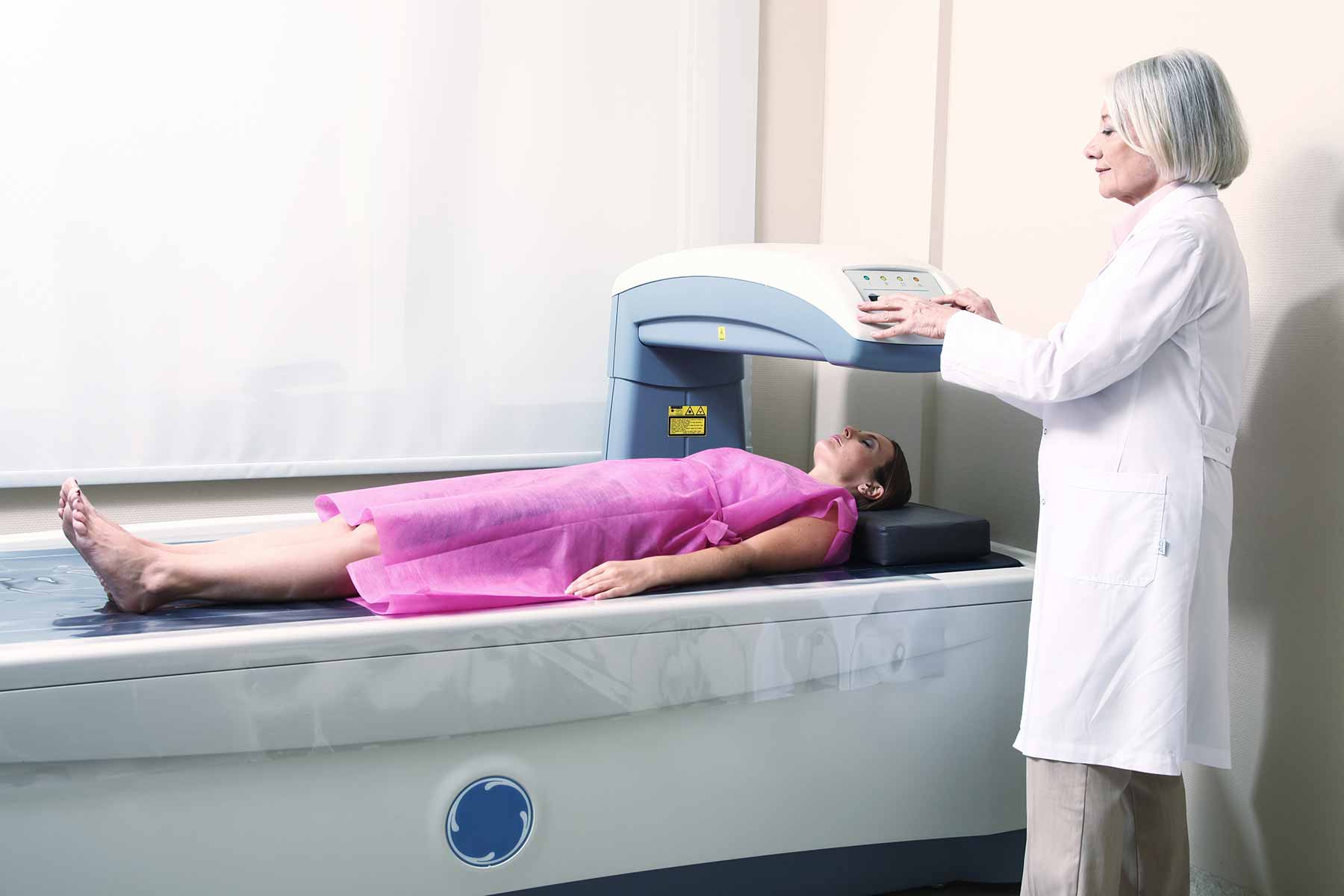
During the scan, you'll lie on a padded table while a mechanical arm passes over your body, focusing on areas most susceptible to fractures: the hip, spine, and sometimes the forearm.
The process is painless and requires no special preparation in most cases, though some providers recommend not taking calcium supplements 24 hours before the exam.
FAQs about bone density tests
Does a bone density test show cancer?
No, a bone density test does not detect cancer. Its primary purpose is to measure bone health and diagnose conditions like osteoporosis. However, if your healthcare provider notices unusual patterns or abnormalities in your bone structure during a scan, they may recommend additional imaging tests or procedures to investigate further.
How long does a bone density test take?
A bone density test is a quick procedure that typically takes 10 to 30 minutes to complete. The actual scanning time is even shorter (usually just a few minutes), but you'll need to factor in time for check-in, changing into a gown if required, and positioning on the exam table.
Does Medicare cover bone density tests?
Yes, Medicare covers bone density tests every two years or more for qualifying patients, especially those at higher risk for osteoporosis: women over 65, men over 70, or those with specific risk factors like previous fractures, long-term steroid use, or certain diseases.
Medicare covers the test at no cost to the patient if ordered by a physician and performed by a provider that accepts Medicare assignment.
Does insurance cover bone density scans?
Most health insurance plans cover bone density scans when the tests are medically necessary and ordered by a healthcare provider. Always check if prior authorization is required and whether the radiologist fee is included.
Insurance does not cover bone density scans performed solely for fitness or body composition analysis.
Are bone density tests safe?
Bone density tests use small amounts of radiation to capture imaging and evaluate the health of bones. However, bone density scans use very low levels of radiation, much lower than a chest X-ray, making them safe for routine monitoring.
Questions to ask your healthcare provider
Ask your healthcare provider these questions to ensure you understand the reason for the test, what to expect during the testing process, and the next steps after receiving the results:
Why do you recommend a bone density test for me, and what are the risk factors you're concerned about?
How should I prepare for the test?
Are there any medications or supplements I should avoid beforehand?
Will my insurance cover this test, and do I need prior authorization?
When will I receive my results?
What do the results mean, and what is considered a normal result for someone my age?
If the test shows low bone density, what treatment options are available?
How often will I need follow-up bone density tests?
Are there lifestyle changes I can make to improve my bone density, such as diet, exercise, or supplements?
The content of this site is for educational purposes only and does not constitute providing medical advice or services. The information provided should not be used for the diagnosis or treatment of health problems. Always consult with a licensed healthcare professional for advice about any medical concerns.